
Projected safety systemsSigns, walkways, crossings & crane exclusion zones
Improve visual safety in warehouses, factories, logistics areas and crane operating zones with projected safety signs, pedestrian walkways, crossings, warning graphics, laser lines and crane exclusion-zone projection.
Projected safety signs for busy industrial floors and working areas.
Painted lines, floor tape and static signs can become worn, damaged or difficult to notice in high-traffic workplaces. Projected safety systems cast visual signs, lines and route markings onto floors or walls without creating a painted surface that traffic can wear away.
Durham Lifting supplies projected safety signs and visual safety systems for pedestrian routes, warehouse crossings, forklift areas, crane bays, loading zones and other locations where clear warnings and boundaries can support the site’s wider traffic-management and risk-control measures.
Projected signs and floor markings for industrial workplaces.
Use projected visual warnings to define pedestrian routes, crossing points, hazard areas and crane operating zones where conventional markings are difficult to maintain or need greater visibility.
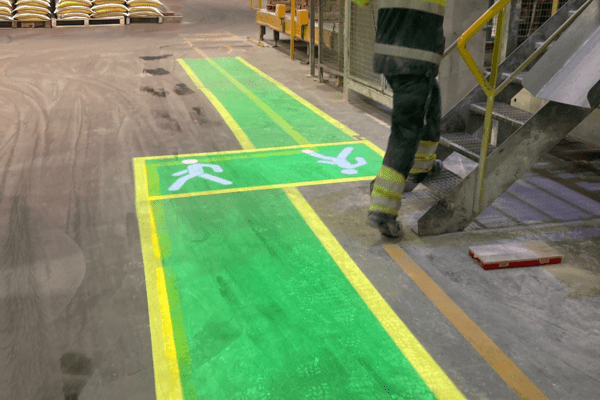
Projected Pedestrian Walkways
Define visible pedestrian routes through warehouses, factories and logistics areas without relying solely on painted floor lines.
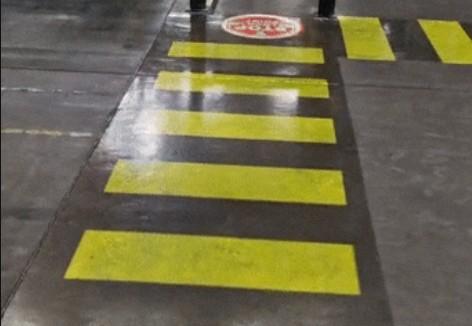
Projected Pedestrian Crossings
Create clearly marked crossing points where pedestrians, forklifts and other workplace vehicles interact.
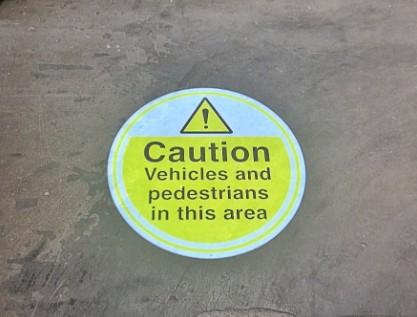
Projected Safety Signs
Project STOP, pedestrian, forklift, PPE, no-entry and other warning graphics onto suitable floors or walls.
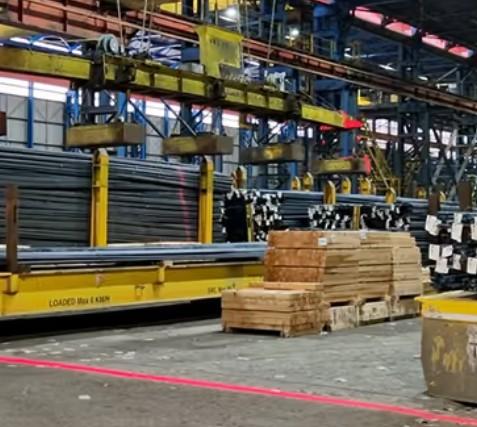
Crane Exclusion-Zone Projection
Project warning zones and visual boundaries around crane operating areas to improve awareness of suspended-load and crane-movement hazards.
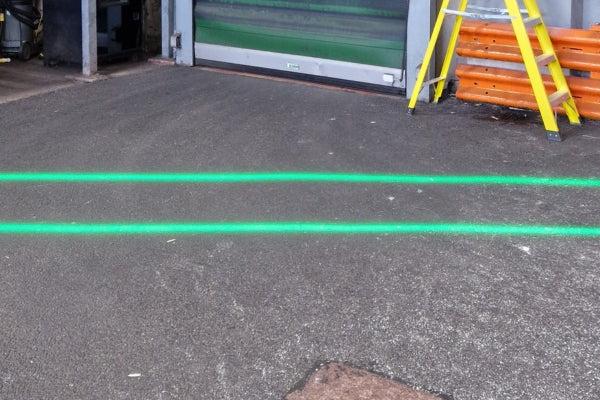
Laser Line Floor Marking
Use projected laser lines to define pedestrian routes, loading areas, storage zones and other working boundaries.
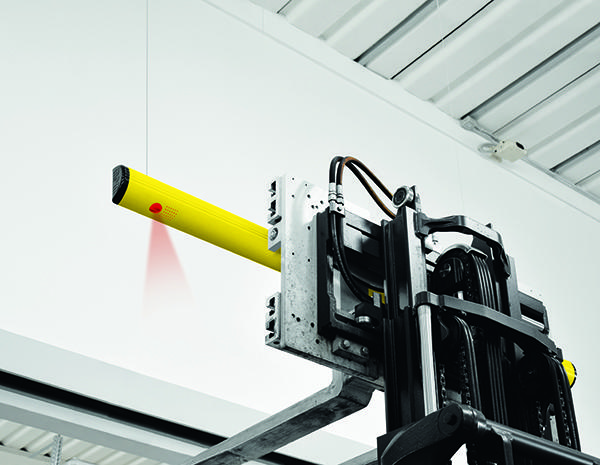
Clatter Bars
Mechanical impact-warning bars can complement visual controls at restricted-height openings and help alert operators before contact with structures.
Keep important visual warnings clear without repainting the floor.
Projected markings can be useful in high-traffic or frequently changing areas because the image itself is not physically worn by forklifts, foot traffic or routine floor cleaning.
Clear at the Point of Risk
Place a warning, crossing or route marking directly where drivers and pedestrians need to see it.
No Painted Image to Wear Away
The projected image is not a painted or taped surface, helping avoid the scuffing and peeling associated with conventional floor markings.
Adaptable Layouts
Projectors and graphics can be reviewed when traffic routes, work areas or operational requirements change.
Support Safer Segregation
Use projected crossings, walkways and warning zones as part of a wider site approach to pedestrian and vehicle safety.
Visual safety controls where traffic, lifting and pedestrians interact.
HSE workplace-transport guidance emphasises separating pedestrians and vehicles wherever possible and clearly marking routes and crossing points where they interact. Projected safety signs can support that wider traffic-management approach.
They are particularly useful where floor markings experience heavy wear, where site layouts change, or where a warning needs to be positioned directly at a specific hazard or operating area.
Projection supports the safety system — it does not replace it.
Projected signs and lines should be selected as part of the site’s risk controls. Physical segregation, barriers, traffic management, lighting and other measures may still be required depending on the workplace and risk assessment.
Projected warehouse and workplace safety across high-traffic environments.
Suitable for sites that need clearer pedestrian routes, vehicle crossings, warning zones or visual boundaries around lifting and material-handling operations.
Specify projected safety around the actual workplace.
The right projection depends on where the warning must appear, the surface and viewing conditions, surrounding traffic and the behaviour the marking is intended to reinforce.
Map the Risk Area
Identify pedestrian routes, crossings, vehicle movements, crane zones and other locations where clearer visual guidance is required.
Select the Visual Control
Choose the appropriate projected sign, walkway, crossing, laser line or complementary warning system for the application.
Supply & Installation
Durham Lifting can support supply and installation, positioning the solution around the site layout and operating requirement.
What to send for a projected safety quotation
Photos or a simple layout of the area are useful. Include the locations to be marked, the type of pedestrian/vehicle/crane movement involved, approximate mounting positions if known and any changes you want to make to existing floor markings or warning zones.
Send Your Safety Requirement →Projected safety sign questions answered.
What are projected safety signs?
Projected safety signs use industrial projectors to display warning symbols, pedestrian graphics, route markings or other visual messages onto suitable floors or walls. Laser systems can also be used to project lines and boundaries.
How do projected floor markings compare with paint or tape?
Projected markings do not create a painted or adhesive surface, so the projected image is not physically worn away by floor traffic. Suitability still depends on the site, surface, lighting and the wider safety controls required.
Can projected pedestrian crossings be used in warehouses?
Yes. Projected pedestrian crossings can be used to make crossing points more visible in warehouse and industrial traffic areas. They should form part of the site’s wider traffic-management measures and risk controls.
Can projected safety signs be customised?
Many projected systems can use different safety symbols, warning graphics and site-specific messages. The appropriate graphic and projector arrangement depends on the application.
Can projected warnings be used around overhead cranes?
Yes. Projected lines, warning graphics and exclusion-zone markings can be used to improve awareness around crane operating areas and suspended-load hazards.
Do projected markings replace barriers or pedestrian segregation?
Not automatically. HSE guidance says pedestrian and vehicle routes should be separated wherever possible and crossing points should be clearly marked. Projection is a visual control and should be considered alongside the site’s risk assessment, physical segregation, barriers and other measures.
What information is useful for a projected safety quote?
Send photos or a layout of the area, the locations to be marked, the type of pedestrian, vehicle or crane movement involved and what warning, route or boundary you want to display. Durham Lifting can then discuss the most suitable approach.
Can Durham Lifting supply and install projected safety systems?
Yes. Durham Lifting can advise on suitable projected safety systems and support supply and installation for industrial applications.
Make the warning visible where the risk actually occurs.
Talk to Durham Lifting about projected safety signs, pedestrian walkways, warehouse crossings, laser floor markings and crane exclusion-zone projection.