
A living monument to Middlesbrough’s industrial heritage.
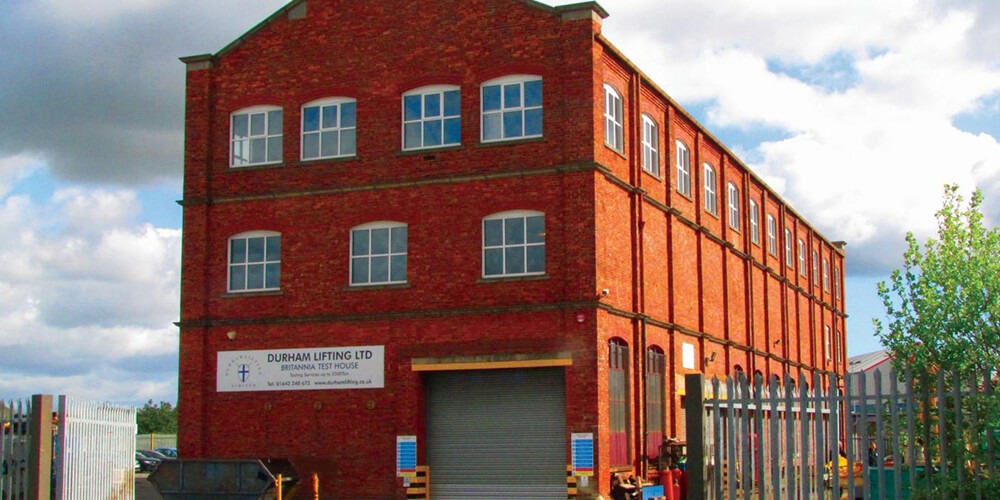
The Britannia Test House is the last surviving structure of the former Britannia Steelworks, with a story connected to Dorman Long, the Sydney Harbour Bridge and nearly a century of structural testing.
Built for engineering. Preserved through use.
Set against Middlesbrough’s rich industrial backdrop, the Britannia Test House stands as a significant monument to the town’s steel manufacturing legacy.
Its crucial contributions to engineering projects, most notably the Sydney Harbour Bridge, underline both its historical and technical importance.
Today, under the stewardship of Durham Lifting, the Test House continues to thrive, adapting to modern demands while preserving its rich legacy.
Last Surviving Structure
The remaining structure of the former Britannia Steelworks.
Dorman Long Heritage
Connected to one of Middlesbrough’s most important engineering names.
Sydney Harbour Bridge
Built in response to testing requirements linked to the bridge contract.
Working Test Facility
Still serving modern lifting, engineering and testing requirements.
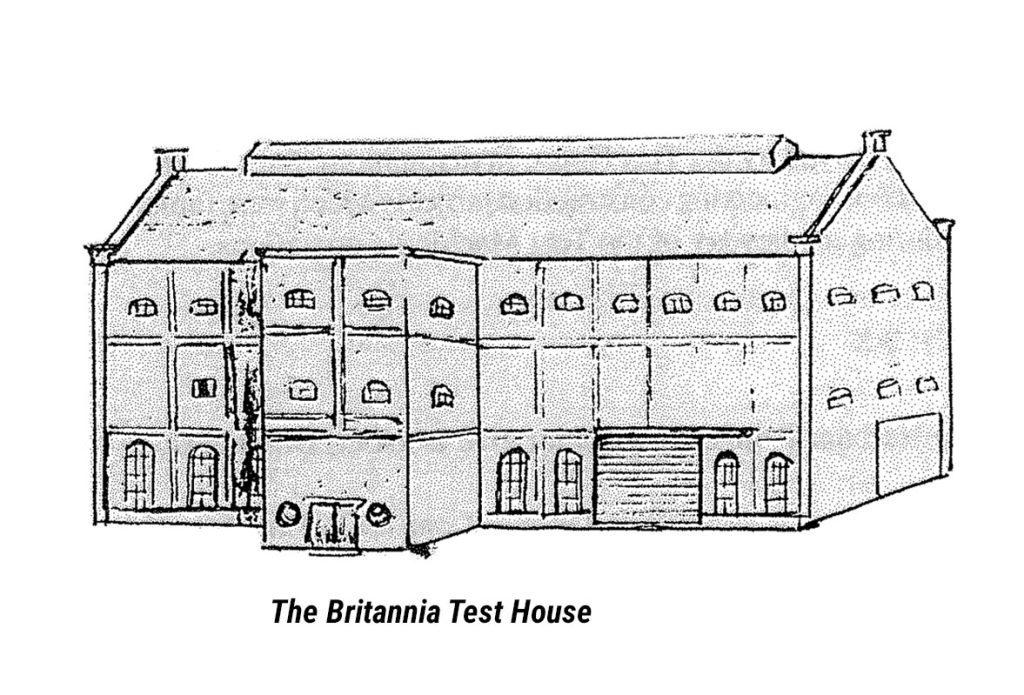
Constructed in response to the Sydney Harbour Bridge contract.
The Britannia Test House was constructed by Dorman Long in response to their contract to build the iconic Sydney Harbour Bridge.
A unique clause in the contract required the company to provide a testing machine with a 1250-ton capacity, capable of stress-testing large-scale steel models. To meet this requirement, Dorman Long invested £33,250 in the project.
Of this investment, £20,000 was allocated for the testing machine and £13,250 for the building itself. Construction commenced in July 1926 at the Britannia site, marking the beginning of a new era in structural engineering testing.
The largest structural steel testing machine in the country.
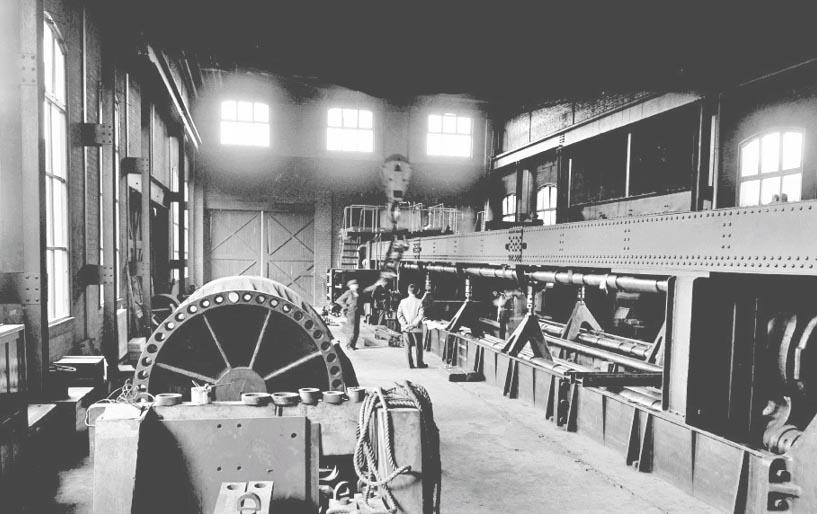
The specification for the Sydney Harbour Bridge required the successful contractor to provide a testing machine of 1250 tons, or 1270 tonnes, capacity to verify the design of bridge members.
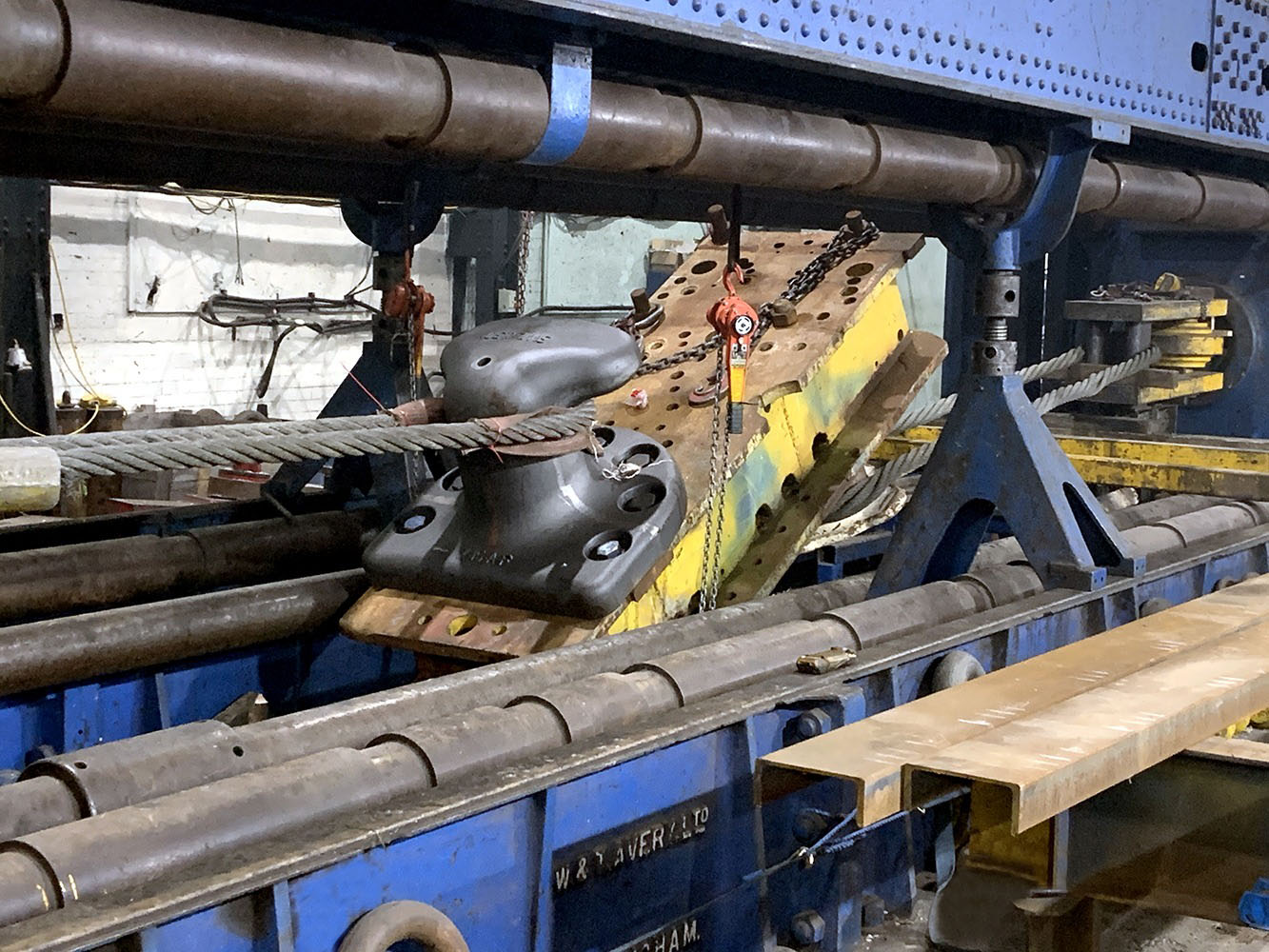
The machine, with a nominal capacity of 2,800,000 pounds, was designed and manufactured by W. & T. Avery Limited of Birmingham and installed at the Britannia Works in July 1926.
At the time, it was the largest universal testing machine in the country. It could handle specimens in both tension and compression up to 50 feet, or 15 metres, in length and as large as 3 feet 9 inches, or 1150mm, square in cross-section.
Bend test specimens could be accommodated up to 20 feet, or 6 metres. The machine was hydraulically powered, with the load weighed through a system of multiple levers counterpoised by a travelling jockey weight on a graduated steelyard.

Testing scale models to prove the bridge design.
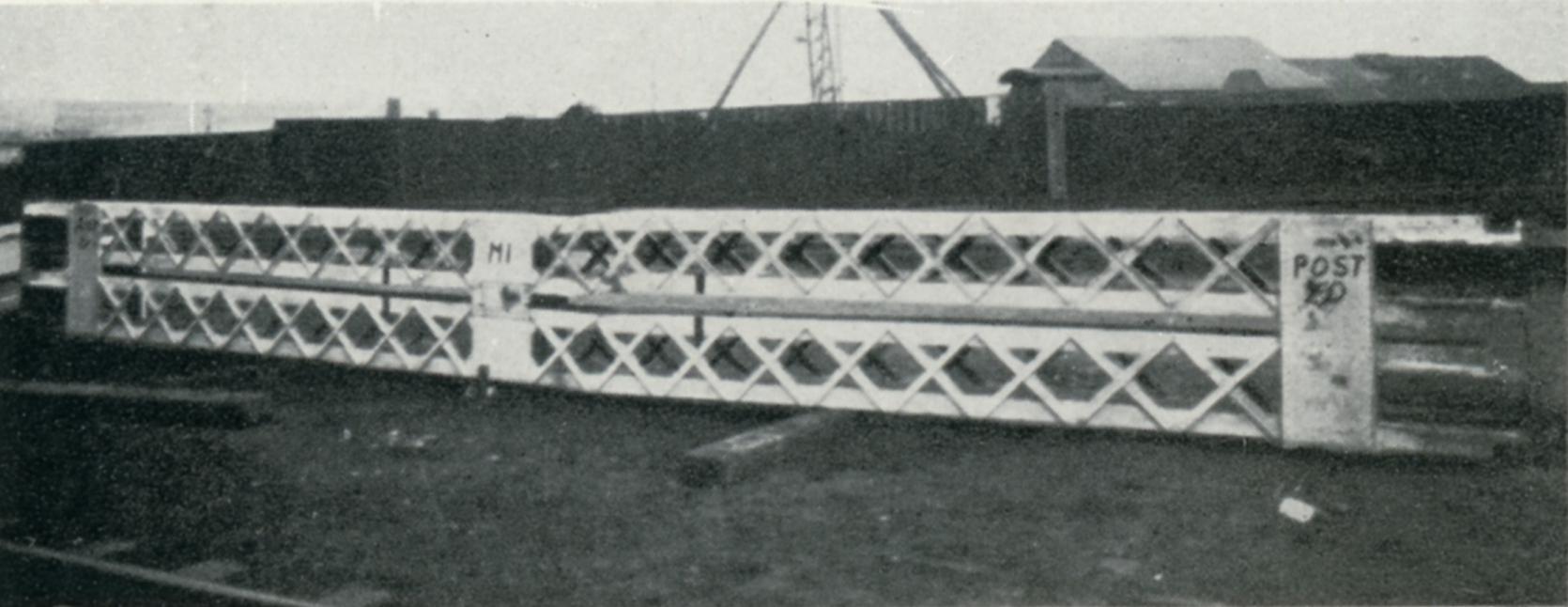
Since no machine could be created strong enough to test full-size bridge members, scale models were used. These were made as large as possible while still being within the capacity of the Avery machine to break.
For the Sydney Harbour Bridge, the typical regime involved three simpler models being fabricated and tested to obtain consistency in the results. A further detailed model was then manufactured to verify that added features such as splices, cover plates and gussets did not significantly change the result.
At a 1:6 scale, some of the component steel sections became too small and thin to be rolled, so further models were created at larger scales, including half lower chord models, to use material of more normal thickness.
What the engineers learned from the models.
Records of distortion were obtained from strain gauges fixed near the outside flanges of the model members, generally using a gauge length of around 10 feet. Readings of axial distortion were taken to the nearest .0001 inch using Ames dials, and load-strain curves were plotted up to the point where the member ceased to behave elastically.
The tests confirmed that the designs were adequate. John Freeman later stated that the information gained, while of considerable interest, did not justify alteration in the design of any member tested.
One important value established through the tests was the effective Young’s Modulus of the members. Small test pieces cut from silicon steel plates and angles showed an average modulus of 31,000,000 lbs per square inch, while the model member tests gave a lower apparent value due to factors such as rivet holes and slip between component parts.
This workable value was important for calculating deformation of the half arches, cable stretch as load increased, the set back of the end posts and the force required from jacks to stress the top chord into its final designed state.
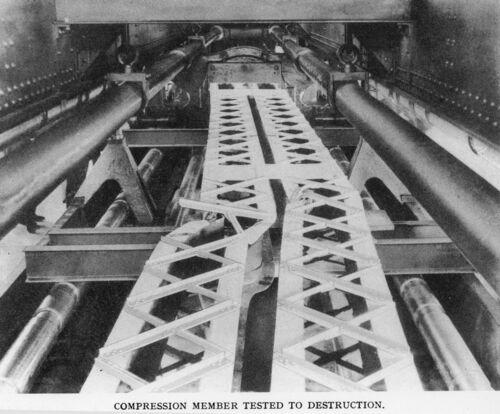
Nearly forty models, wire ropes, sockets and jacks.
Before the arch construction of the Sydney Harbour Bridge commenced, nearly forty scale models of its steel members were tested to destruction at the Britannia Test House.
The facility also tested erection equipment, including wire ropes and sockets, which were essential for the bridge’s assembly. Tie-back cables designed to carry a maximum load of 128 tons were tested to destruction, with samples reportedly not failing below 350 tons.
Creep in the cables under prolonged load was also studied. Under a 100-ton load, similar to that applied in Sydney, the cables extended by approximately 0.002 inch per foot over 40 days, with around half of this strain occurring in the first ten days.
The eight 850-ton jacks used to stress the top chord were also calibrated using the Avery machine, with dedicated pressure gauges assigned to each.
From commercial clients to defence projects.
Following completion of the Sydney Harbour Bridge, the Test House continued to serve a range of commercial clients, including the Air Ministry, Admiralty and War Office.
During the Second World War, it played a pivotal role in defence projects, providing critical testing services that supported the war effort.
In the post-war era, its services expanded to include civil aviation authorities, the Ministry of Defence and numerous engineering firms, both domestic and international.
From historic testing machine to modern test house capability.
The Avery testing machine was later modernised to operate on hydraulic oil pressure, enhancing its capacity to support a wider range of civil and mechanical engineering projects.
This included testing materials and constructions such as concrete structures, crane and ladle hooks, and other mechanical lifting gear.
While almost all of the Dorman Long steelworks and fabrication shops at Middlesbrough have closed and been demolished, the testing machine and its building survive in use, now operated by Durham Lifting.
Durham Lifting also operates separate heavy-duty test bed facilities, including the 3000Te Vertical Test Bed, with working loads of 3000Te in tension and 1500Te in compression. This is separate from the historic Avery testing machine and forms part of the wider modern testing capability available at Britannia Test House.
From rail logistics to road transport.
With the closure of the Britannia Steelworks in the 1970s, the logistics of specimen transportation changed significantly, shifting from rail to road.
There were discussions about relocating the test machine to the Lackenby Works site, but the complexity and cost of such a move, alongside the potential risk to the machine’s precision, prevented this from happening.
As the surrounding industrial landscape changed, the Test House remained in place, preserving a direct connection to Middlesbrough’s steelmaking and engineering past.
A century of testing heritage.
The story of Britannia Test House spans bridge-building, wartime defence work, post-war engineering, changing industrial logistics and its modern role with Durham Lifting.
Construction begins
Dorman Long begins construction of the Britannia Test House in response to testing requirements linked to the Sydney Harbour Bridge contract.
Avery testing machine installed
W. & T. Avery of Birmingham creates the vast structural steel testing machine housed inside the Test House.
Bridge model testing
Scale models of Sydney Harbour Bridge steel members are tested to destruction, alongside testing of wire ropes, sockets and erection equipment.
Defence project support
The Test House provides important testing support to organisations including the Air Ministry, Admiralty and War Office.
Britannia Steelworks closes
Transport logistics shift from rail to road, with relocation of the machine discussed but ultimately avoided due to cost, complexity and risk.
Durham Lifting begins a new chapter
Since the mid-1990s, Durham Lifting has continued the facility’s legacy of structural testing and engineering support.
A working test house
Britannia Test House remains a living part of Middlesbrough’s engineering community and continues to serve modern testing and lifting requirements.
The next chapter in a working industrial landmark.
Since the mid-1990s, Britannia Test House has entered a new chapter under Durham Lifting. The facility continues its legacy of structural testing and engineering excellence, supported by ongoing investment in modern testing equipment and wider lifting capability.
Alongside the historic Avery testing machine, Durham Lifting operates separate heavy-duty test bed facilities, including the 3000Te Vertical Test Bed, with working loads of 3000Te in tension and 1500Te in compression.
The Test House is not merely a relic of the past. It remains a living, working part of the engineering community, continually adapting and contributing to the field of lifting equipment testing and structural verification.
Need proof load testing or technical support?
Speak to Durham Lifting about proof load testing, tensile testing, compression testing, destructive testing and specialist lifting equipment testing.