
Crane fall protectionSafety lines & fall arrest systems for overhead crane access
Support safer inspection, servicing and maintenance at height with crane safety lines, horizontal lifelines, fall restraint and fall arrest systems configured around overhead cranes, gantries and elevated access routes.
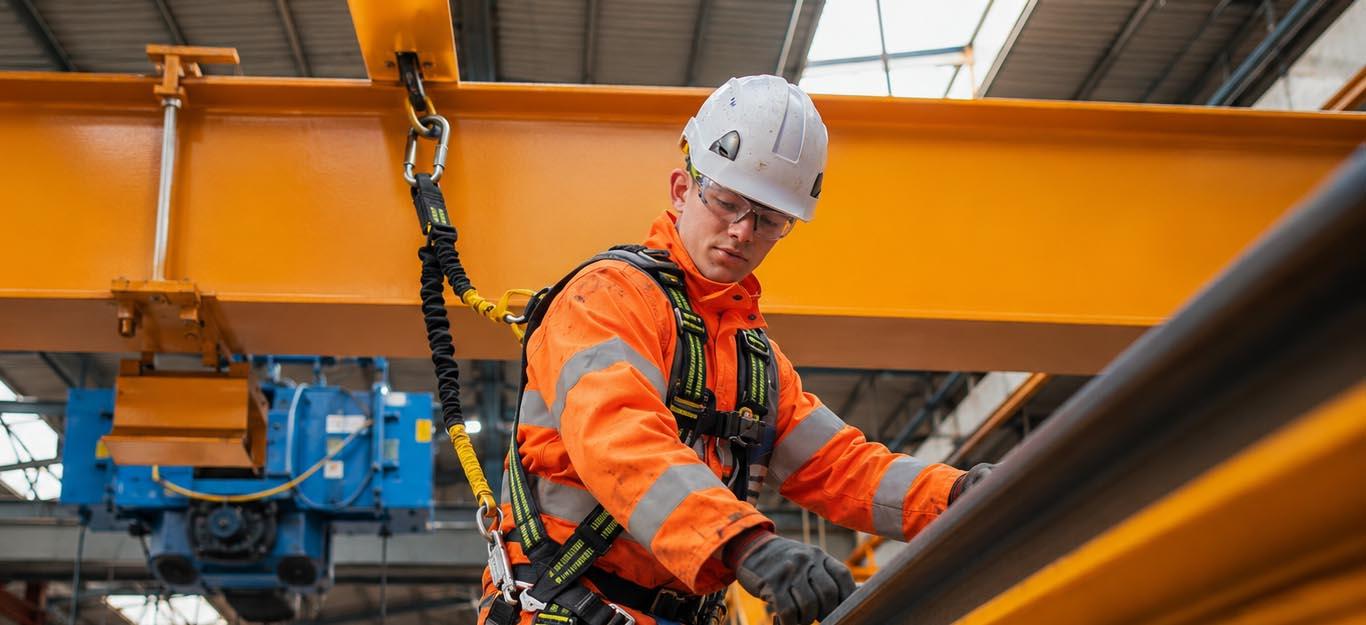
Protect maintenance teams where work at height cannot be avoided.
Crane inspection and maintenance can require access to elevated structures, runways, walkways and crane components. The right fall-protection approach depends on the task, access route and hierarchy of controls.
Crane Maintenance Routes
Support safer movement where personnel need access to crane structures, gantries or elevated maintenance positions.
Prevent Reaching a Fall Edge
Work-restraint arrangements can be considered where the aim is to prevent a person reaching a position from which they could fall.
Limit Fall Consequences
Fall-arrest systems may be appropriate where a fall risk remains and the system is designed around the actual task and anchorage arrangement.
Existing Crane Safety
Safety-line systems can form part of a wider crane access, maintenance or modernisation project for suitable existing installations.
Start with the access route, not the product list.
The most suitable arrangement depends on how personnel reach the crane, where they need to move, the available structure and whether the objective is fall prevention, restraint or arrest.
Durham Lifting can review the crane environment and help identify a practical route for overhead lifelines, horizontal safety lines, retractable devices or other suitable fall-protection arrangements.
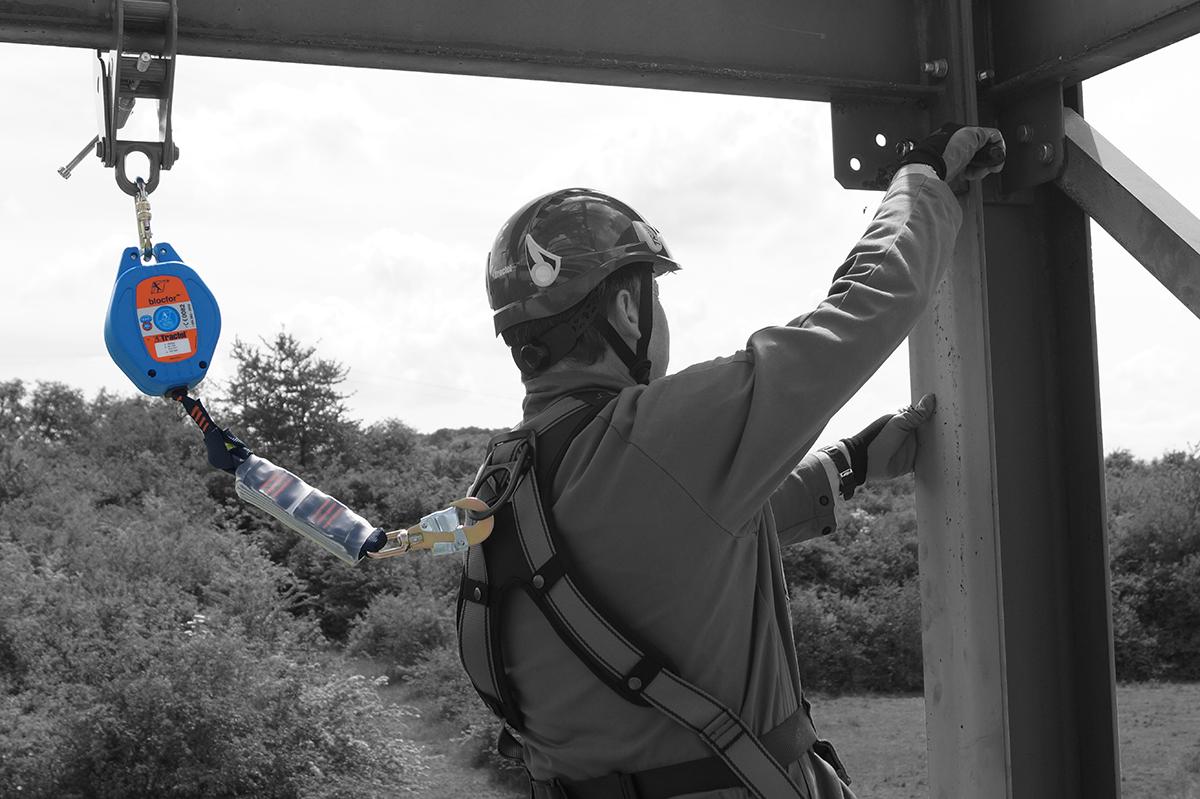
Fall arrest is not the first control to reach for.
HSE guidance requires work at height to be planned and risk assessed, following a hierarchy that first considers avoiding the work, then preventing falls, then minimising the distance and consequences if a fall risk remains.
Avoid
Consider whether the task can be completed without exposing personnel to work at height.
Prevent
Where work at height is necessary, consider safe places of work and collective fall-prevention measures first.
Restrain
Where appropriate, personal restraint can prevent the user reaching a fall position.
Arrest
If a fall risk remains, fall-arrest equipment may be used to minimise the distance and consequences of a fall.
Plan Rescue
Any personal fall-protection arrangement must be supported by suitable planning, competence and emergency/rescue considerations.
Different crane layouts need different fall-protection routes.
The final arrangement should be based on the actual structure, access path and work method rather than assuming one safety-line type suits every crane.
Safety, access and maintenance around the same crane system.
Crane fall-protection questions answered.
What is crane fall protection?
Crane fall protection covers measures used to manage the risk of personnel falling while accessing or working on overhead cranes, gantries, runways or related elevated structures.
What is the difference between fall restraint and fall arrest?
Fall restraint is intended to prevent the user reaching a position from which they could fall. Fall arrest is intended to minimise the distance and consequences after a fall has occurred. The correct approach depends on the task and risk assessment.
Can safety lines be fitted to an existing overhead crane?
They can be considered for existing crane installations where the structure, access route, anchorage and wider working-at-height controls support a suitable engineered solution.
Are horizontal lifelines suitable for crane maintenance?
Horizontal lifelines are commonly used for industrial maintenance access, including movement along crane or gantry structures, where the system has been designed for the specific application.
Does a fall-arrest system replace guardrails or safe access platforms?
No. HSE guidance requires the work-at-height hierarchy to be followed. Collective fall-prevention measures should be considered before personal fall-protection systems where reasonably practicable.
What information is useful for a quotation?
Provide the crane or gantry layout, access route, work task, movement required, existing safety measures and photographs or drawings where available.
Need safer maintenance access around an overhead crane?
Send the crane layout, access route, task and site photographs if available. Durham Lifting can review a suitable fall-protection and safety-line route for the application.